 Certified Chevrolet Sales Consultant
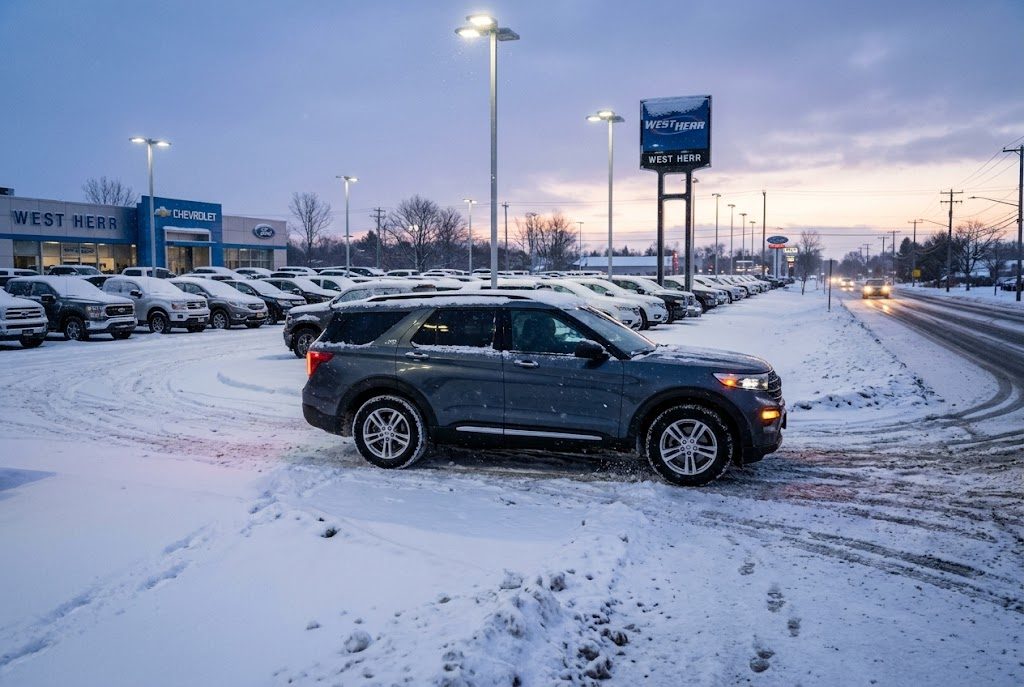
I recently had a new driver working in healthcare. After chatting with her on the phone for a bit, she decided to book an appointment. When she arrived with her dad, I asked her about her need for AWD or FWD. She said, "I would rather have AWD, but FWD would be fine."
She's not wrong to want AWD. So I asked one more question: "What tires are you planning to run this winter?"
Her dad shrugged. "Whatever's on it."
That's the conversation I want to have with you today, because it's the one most people never get at a dealership.
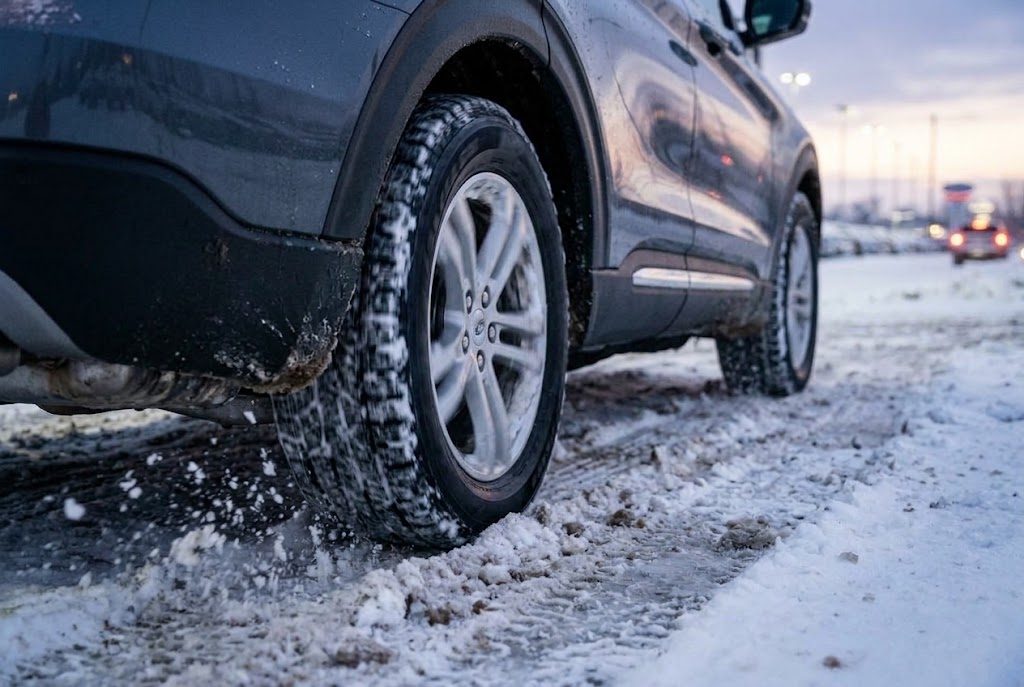
So what actually stops your car?
Not the engine. Not the drivetrain. Definitely not the badge on the liftgate.
Your tires. Four patches of rubber, each about the size of your hand. That's everything holding a few thousand pounds of SUV to the road. Your AWD system sends power to those four patches. It can't create grip they don't have.
A few things worth mentioning that I've learned over the years:
- AWD helps you go. It sends power to all four wheels so you can pull out of an unplowed driveway or climb a slick hill.
- AWD does not help you stop. Every car brakes with all four wheels, front-wheel drive or all-wheel drive.
- AWD does very little to help you turn on ice. That's the tires' job.
I've been doing this for seven years and I still can't make a car stop faster by talking to it. Believe me, I've tried.
The test that settles it
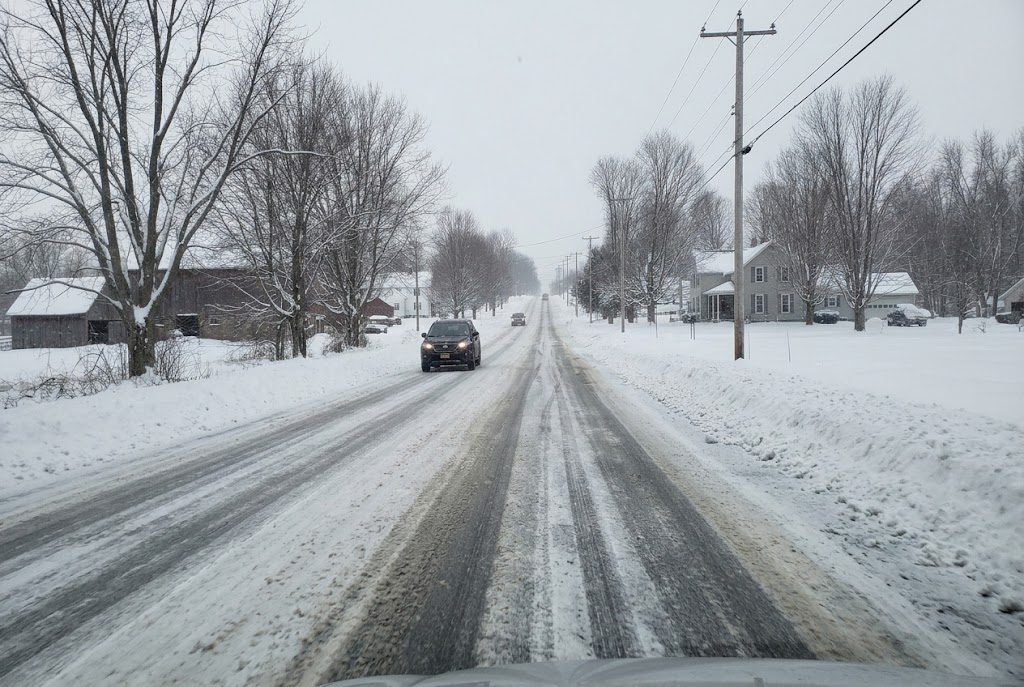
Consumer Reports tested this exact question on its snowy test track in Connecticut. They put an all-wheel-drive Honda CR-V and a front-wheel-drive Toyota Camry on winter tires and braked both from 60 mph. Both stopped in about 300 feet.
Then they braked the AWD CR-V on its original all-season tires. It took 668 feet. That's almost the length of two football fields.
Some quick math shows us what that looks like in real life. That's 368 extra feet, more than 20 car lengths, to stop the same vehicle.
That test is from 2015. Tires have gotten better since, but Consumer Reports' advice today hasn't changed: winter tires are a good choice for every car, front, rear, or all-wheel drive.
"You should be considering your ability to stop and corner in snow."
Gene Petersen, Consumer Reports tire testing
To be fair to AWD
AWD has real value in Western New York. In deep, unplowed snow it keeps you moving when a front-wheel-drive car might get stuck. And if your drive is mostly well-plowed roads, Consumer Reports says a good set of all-seasons can get you by.
But getting by and stopping in time are not the same thing. So what's the rule?
How I'd set it up for a Buffalo winter
Here's the two-set system I recommend:
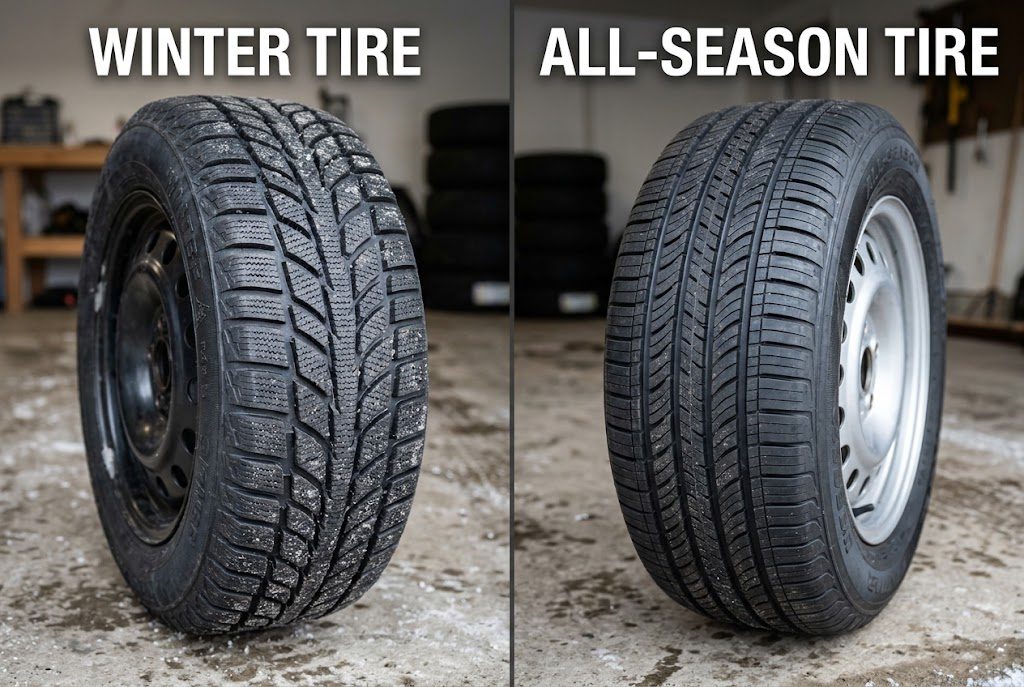
- Swap on temperature, not snow. Once it stays below about 45°F, all-season rubber starts to stiffen and lose grip. Don't wait for the first storm, because that's when every tire shop in Erie County is booked.
- Buy four, never two. AAA warns that only two winter tires can hurt your stopping and steering and can even cause a spin-out.
- Put your winters on their own wheels. AAA says a swap then runs closer to $60 to $80 a set, instead of $60 to $300 to remount and balance. It also keeps your nicer wheels out of the road salt.
- You're not paying double. Two sets split your miles, so each set lasts more seasons before it needs replacing.
- Ask about tire pressure sensors for the second set of wheels. Depending on the vehicle, they can add to the cost.
Quality matters, even on all-seasons
Not every all-season tire is equal. Consumer Reports found all-season tires start losing traction in wet and wintry weather long before they look worn out. Check your tread every fall, and when it's time to replace them, don't just buy the cheapest set on the rack.
Back to that new driver
I told her and her dad what I'd tell my own family. If AWD fits your budget, get it, and put a good set of winter tires on it. If the budget only stretches for one, buy the tires first.
I want you home for dinner every night this winter. That's the whole point.
When you are ready, I'm happy to walk through what makes sense for how you drive. Call me at 716-932-4793 or book time with me.
Terry Thompson, Certified Chevrolet Sales Consultant, West Herr Chevrolet of Williamsville
- Consumer Reports: Do You Really Need AWD in the Snow? (Nov. 2015)
- Fox News reprint of the Consumer Reports article
- WXYZ / Consumer Reports: Is All-Wheel Drive Worth It?
- Consumer Reports: Winter/Snow vs. All-Season Tires
- Consumer Reports: Make Sure Your Tires Have Enough Tread for Winter
- Kiplinger: Why Winter Tires Trump All-Wheel Drive
- Michigan State Police: Winter Tire Safety Tips
- AAA: How Much Are Snow Tires?
- Kal Tire: The 7 Degree Switch