

Your car loan interest might be tax deductible
A new federal rule, and the one detail that decides whether you get it.
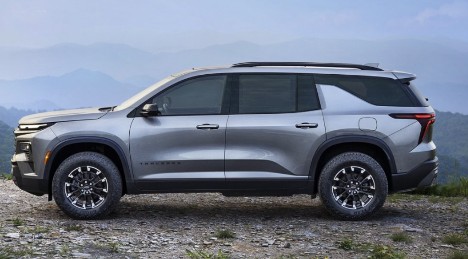
A number of my customers have asked me about this over the last few weeks, so here is the plain version. A new federal rule lets you deduct up to $10,000 a year in car loan interest on your taxes, for tax years 2025 through 2028. You do not have to itemize to get it, which is the part that surprises most people.
Here is where it gets specific. To qualify, the vehicle has to check every one of these boxes: 1. New, not used, with the original use starting with you. 2. Bought, not leased, because lease payments do not qualify. 3. For personal use, not business use. 4. Financed with a loan that started after December 31, 2024, and secured by the vehicle. 5. Assembled in the United States.
That last one is where people get tripped up. Two vehicles sitting side by side on the same lot can land on opposite sides of it.
"The taxpayer must include the Vehicle Identification Number (VIN) of the qualified vehicle on the tax return."Internal Revenue Service
Right now the Traverse, the Tahoe, and the Colorado are assembled in the United States. The Equinox and the Trax are not. Some Silverados are and some are not, which is why the window sticker matters more than the badge on the tailgate. The sticker lists the final assembly point. The VIN will tell you too, and the free NHTSA VIN decoder confirms it in about a minute.
Check where it was built before you sign, not after.
If you bought a new vehicle with a loan any time after the start of 2025, this may already apply to you on this year's return. That is worth five minutes of checking.
A few things worth mentioning. The deduction phases out above $100,000 of income, or $200,000 if you file jointly. It runs through tax year 2028. Used vehicles and leases do not qualify. And I am not a tax preparer, so run your own situation past yours before you count on a number.
Want me to check your vehicle?
Send me the VIN, or just the year, make and model, and I will tell you whether it qualifies. No charge, and no pitch attached.
By the Numbers
Payments keep climbing and loans keep stretching, and the value of this deduction depends on how much qualifying interest you actually pay.
Some quick math shows what that can look like in real money. Take the current average amount financed, $44,664, at the average 7% APR. Over 84 months, that works out to about $674 a month, roughly $2,964 of interest in the first year, and about $11,960 of interest over the life of the loan.
Finance the same $44,664 at 7% for 60 months and the payment rises to about $884 a month, while total interest falls to about $8,400.
So yes, the longer loan can generate more interest that may qualify for the deduction. It also costs about $3,560 more in total interest to get there.
Deduct the interest if you qualify. Do not borrow more or stretch the loan just to create a larger deduction.
Official sources:
What This Means for You
Here is what to actually do with this:
- Before you sign anything, find the window sticker and check the final assembly location.
- If you bought the vehicle new and it is already in your driveway, run the VIN through the free NHTSA VIN decoder, or send me the VIN and I can help you check it.
- Bring the VIN and your loan paperwork to your tax preparer, because the VIN will be needed if you claim the applicable tax benefit.
One caution, and I mean this one: if the vehicle that actually fits your family does not qualify, buy the one that fits.
Think about the third row, cargo room, the commute you actually drive, and whether you need AWD for the winter conditions you actually deal with.
A tax break is a nice benefit on a vehicle that already works for you. It is a poor reason to buy and drive one that does not.
When you are ready, I can walk you through your financing options either way.